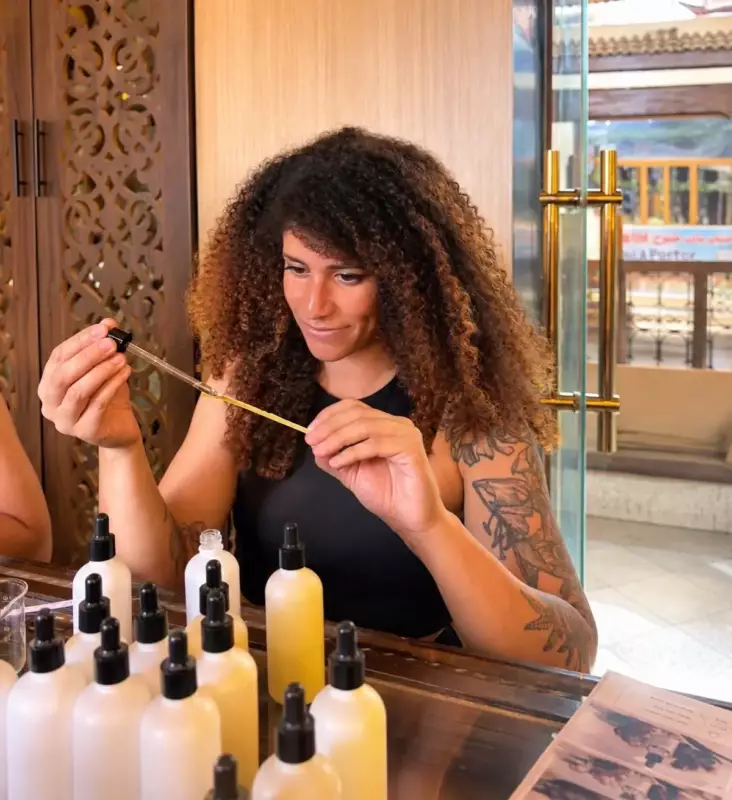
You smell Morocco before you see it. In the alleys of the Marrakech Medina, the cedar of the carpenters’ workshops mingles with spices, fresh mint and incense. Moroccan perfumes draw on this landscape: flowers grown in the southern valleys, woods from the Atlas, resins that arrived along the caravan routes. Here are the scents to know.
The Kelaat M’Gouna rose
At the foot of the High Atlas, the Dades Valley is nicknamed the Valley of Roses. Damask roses are grown there and their petals are distilled into rose water and essence. Every spring a festival celebrates the harvest. In perfumery, the Moroccan rose brings a floral heart that is both fresh and honeyed. It pairs beautifully with oud and amber, a classic combination of oriental perfumery.
Orange blossom: the scent of hospitality
Orange blossom water, from the bitter orange tree, is everywhere in Morocco: in gazelle-horn pastries, in tea, and sprinkled on guests’ hands as a welcome. Its note is luminous, slightly honeyed and powdery. It is one of the most popular notes in our workshops, ideal for a fresh and elegant perfume.
Jasmine from the riads
Jasmine climbs the walls of riads and perfumes summer evenings. Sunny and heady, it gives character to floral compositions. A touch is enough: it is a powerful note.
Atlas cedar
Atlas cedar grows in the forests of the Middle Atlas. Its wood is used for carved ceilings and palace doors, and its essential oil offers a dry, clean, slightly smoky woody note. It gives a perfume structure and makes it last longer.
Amber and musk: the warmth of the souks
In the souks, amber and musk are still sold in small pieces or as oils. In perfumery, “amber” is a warm, resinous, vanilla accord, very different from the amber stone. Musk today comes as clean, soft white musks or as darker, powdery musks. These base notes help a perfume last on the skin.
Oud, the precious wood
Oud comes from agarwood, a rare wood from Asia. It has become the signature of Arabic perfumery and is much loved in Morocco. Its note is deep and woody, sometimes smoky or animalic. Dosed precisely, it gives a composition instant elegance.
Spices and incense
Saffron, cardamom, cinnamon, pepper: spices warm up oriental perfumes. Incense and bakhour, burned in homes, add an enveloping, spiritual dimension.
How to create a Moroccan perfume that suits you
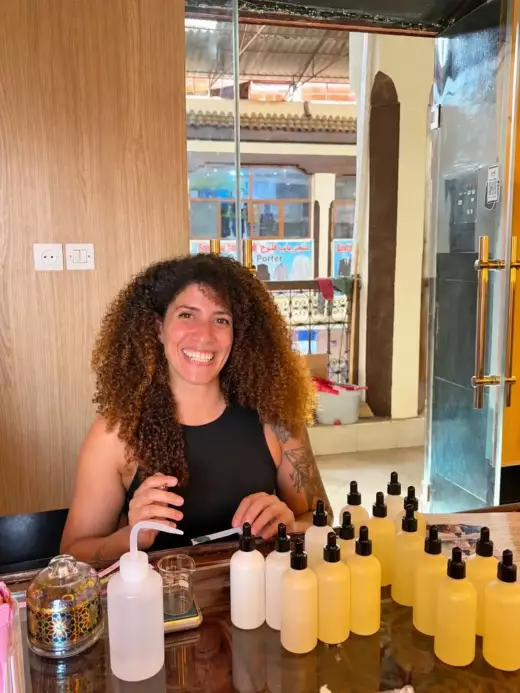
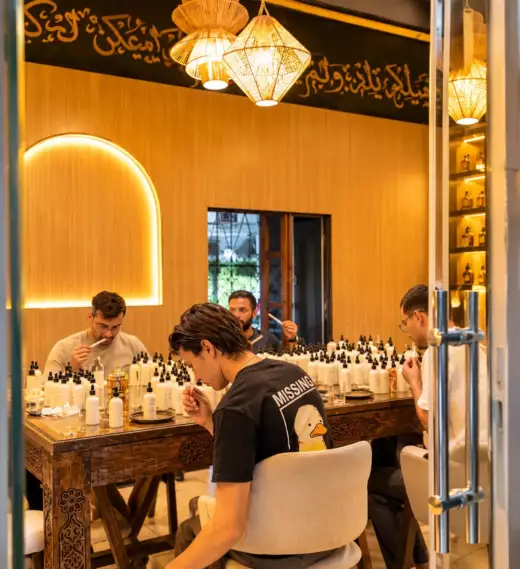
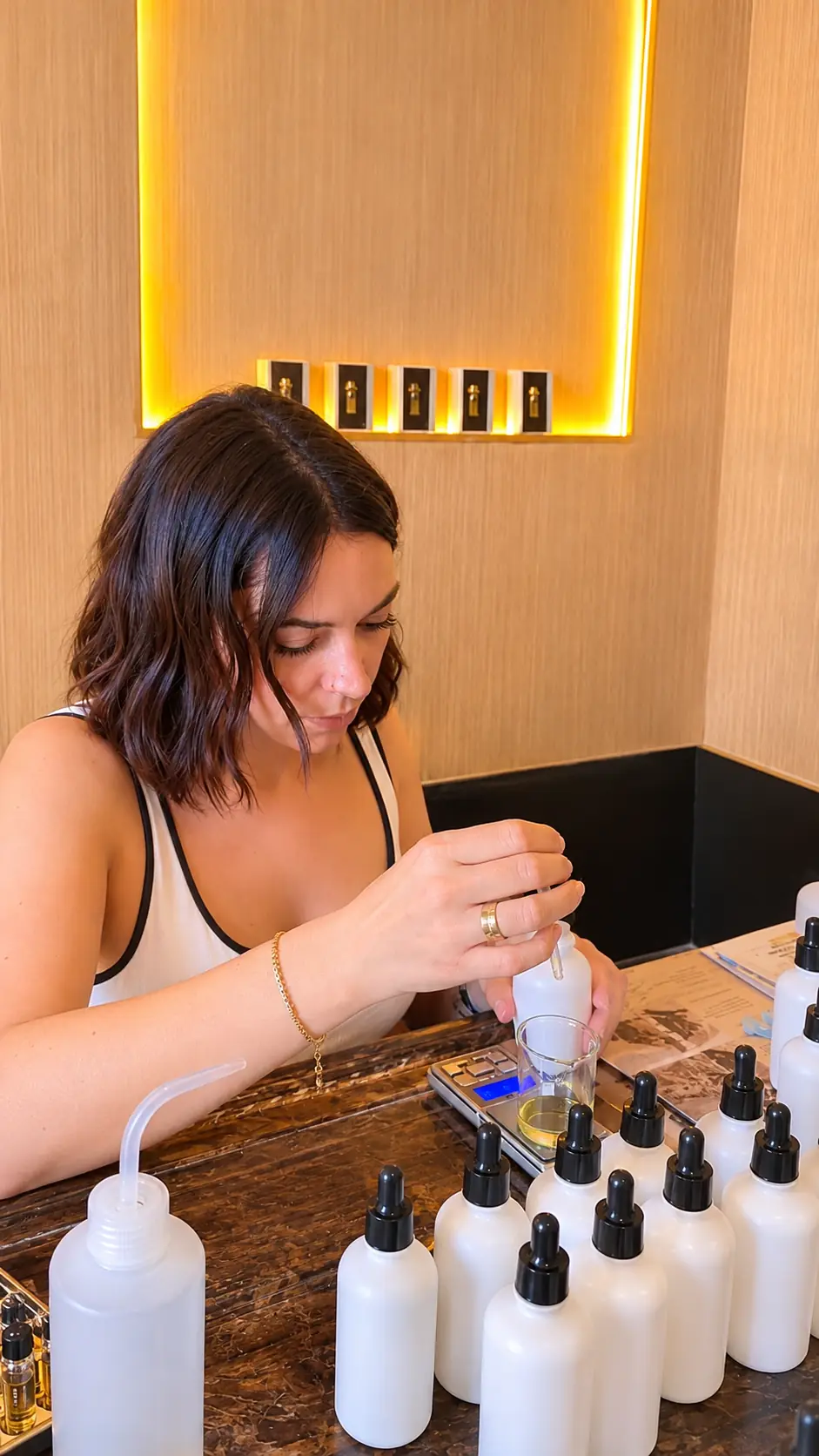
A good Moroccan-inspired perfume often combines a flower (rose, orange blossom or jasmine), a wood (cedar or oud) and a warm note (amber, musk or vanilla). The easiest way is to smell them side by side, which is exactly what our perfume-making workshop in Marrakech offers, where you compose your formula with a perfumer.
Compose your own Moroccan perfume, 50 ml bottle included.
And if you are looking for a perfume to bring home, read our guide to the best perfume souvenir from Marrakech to avoid bad surprises.
Frequently asked questions
What is the typical scent of Morocco?
Orange blossom and rose are the most iconic, often paired with amber, musk, Atlas cedar and oud.
Where can I smell Moroccan perfumes in Marrakech?
In the souks of the Medina, and in a guided way in a perfume workshop such as Only Fragrance Square in Bab Ftouh.
Is oud Moroccan?
Oud comes from Asian agarwood, but it is central to Arabic and Moroccan perfumery, often paired with rose.